Grow into a CX leader and manager who builds and leads a high-performing team — one that drives innovative, impactful customer initiatives that shift how Manulife thinks about and serves its customers. To be the kind of leader other functions actively seek out as a strategic partner, not just a service provider.
Become an effective CX leader without formal authority — known for sound, decisive judgment, and recognized for fostering a cross-functional environment where people collaborate with purpose, grow through real accountability, and deliver successful project outcomes together.

Three frameworks. One honest picture of how I naturally lead — and where I need to grow.
Introverted · Sensing · Thinking · Judging
I process internally before I share. I need to validate my thinking before I put it on the table — which can read as hesitation in fast-moving rooms.
I anchor to what is concrete and proven. I stress-test ideas before building them. This makes me rigorous — and sometimes a momentum-killer for early-stage thinking.
I decide through logic, not feeling. I make hard calls. But I can come across as cold when people need to feel heard before they're ready to be reasoned with.
I'm most comfortable when things are decided and moving. Ambiguity is uncomfortable — which is a real gap in a role built on navigating strategy without certainty.
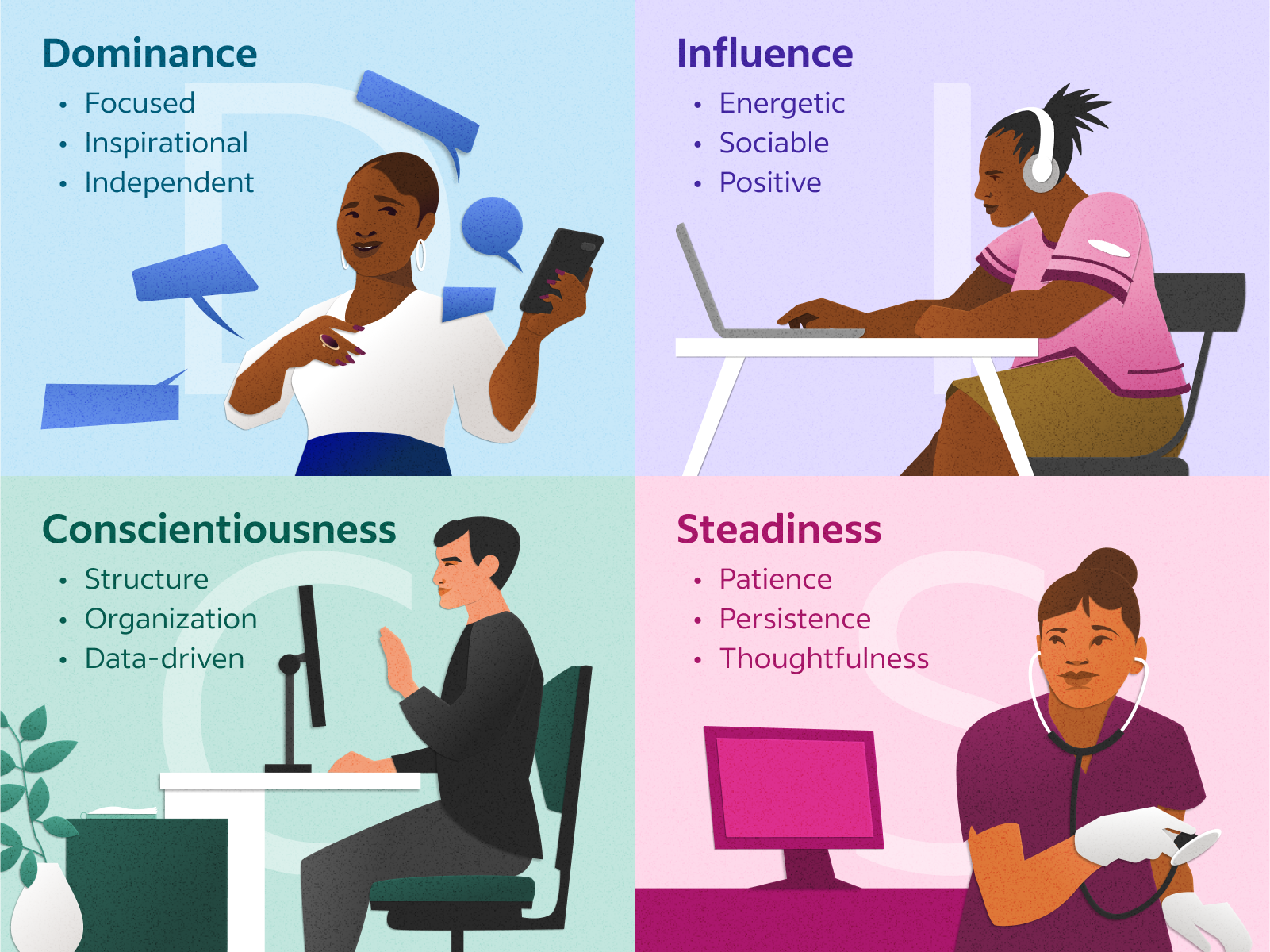
Primary behavioral profile
The asset: I genuinely enjoy connecting with people and I approach them as partners, not obstacles. Across Ops, IT, and Distribution, people want me in the room — because they trust me and feel that.
The blind spot: I+S prioritizes harmony. I delay or over-soften difficult things. In a role where developing people is the goal, this is a real gap that compounds.
The pattern across these five tells a coherent story — with clear strengths and a predictable set of gaps.
Energized by new knowledge. Challenge: channel this into developing others, not just myself.
High drive, high bar. Risk: instinct to own the work rather than let others grow through it.
I see how pieces fit — people, timelines, priorities — and reorganize when it isn't working. My coordination engine in cross-functional work.
I invest deeply in a small circle. Gap: network is deep but narrow — compounds over time for a CX leader.
I own what I commit to — fully. Risk: tips into over-ownership. I fix problems others should solve.
Reliable. Trusted. Growing. But defaults to doing over enabling — and structure over experimentation.
The foundation this plan builds on.
I deliver what I commit to — consistently. In cross-functional CX projects, this reliability is foundational and earns me access to conversations beyond my formal title.
I invest in relationships fully — context, follow-through, genuine care. Over two years at Manulife, this has built real access across Ops, IT, and Distribution that goes beyond my role.
I learn actively and deliberately. When a challenge arrives without a ready answer, I go find the framework — not push through with what I already know.
Three honest gaps. Three deliberate targets. Grounded in the leader I need to become.
Lead a CX function where bold, customer-first thinking is modelled from the top — and people feel safe to test before they're certain.
ISTJ instinct evaluates before it explores. I stress-test ideas before developing their potential. Teams that receive that consistently stop generating ideas.
Mobilize stakeholders to genuinely commit and own deliverables — and develop the discipline to fully release control once direction is set.
Two patterns: stakeholders comply without commitment; and I hold on to quality — reworking, checking in beyond what's agreed. Others never develop real ownership.
Give timely, structured feedback using SBI — and run GROW coaching conversations without defaulting to advice-giving or over-softening.
I+S protects relationships at the cost of honesty. Feedback gets softened or reframed so carefully the recipient misses the point entirely.
Three actions. Three gaps. One framework that runs through all of them.
By June 2027, make faster and better-quality decisions by developing big-picture awareness, reducing over-reliance on data before committing, building trust in others' inputs, and consistently generating at least one unconventional option before defaulting to the conventional choice.
By June 2027, consistently mobilize project stakeholders across functions to commit to and own their deliverables through deliberate influencing, while developing the discipline to fully delegate task ownership and release quality control to create real accountability in others.
By June 2027, give timely, structured feedback using the SBI framework consistently and naturally, and run GROW coaching conversations with peers and collaborators without defaulting to advice-giving.
A private space to record how I'm growing. Entries are saved in your browser — come back anytime.
No reflections yet. Start your first one above.
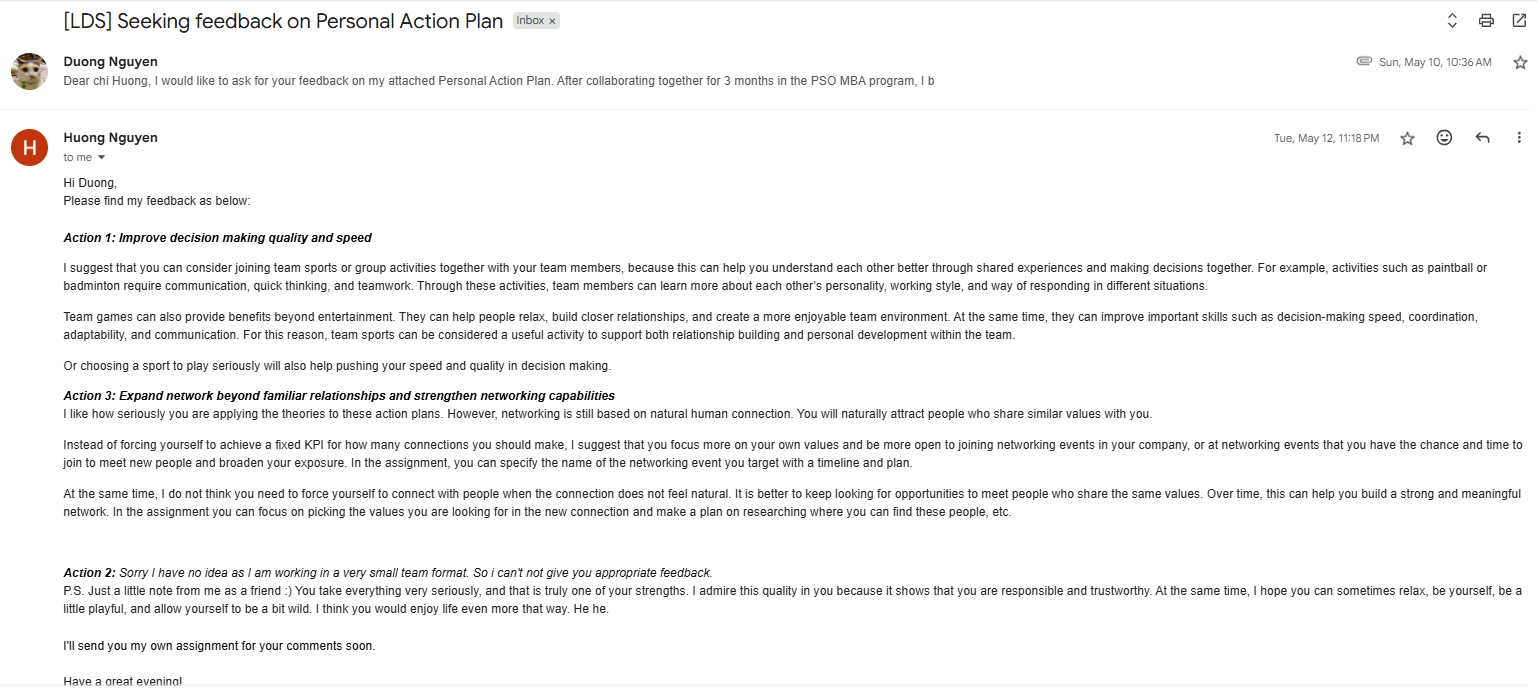
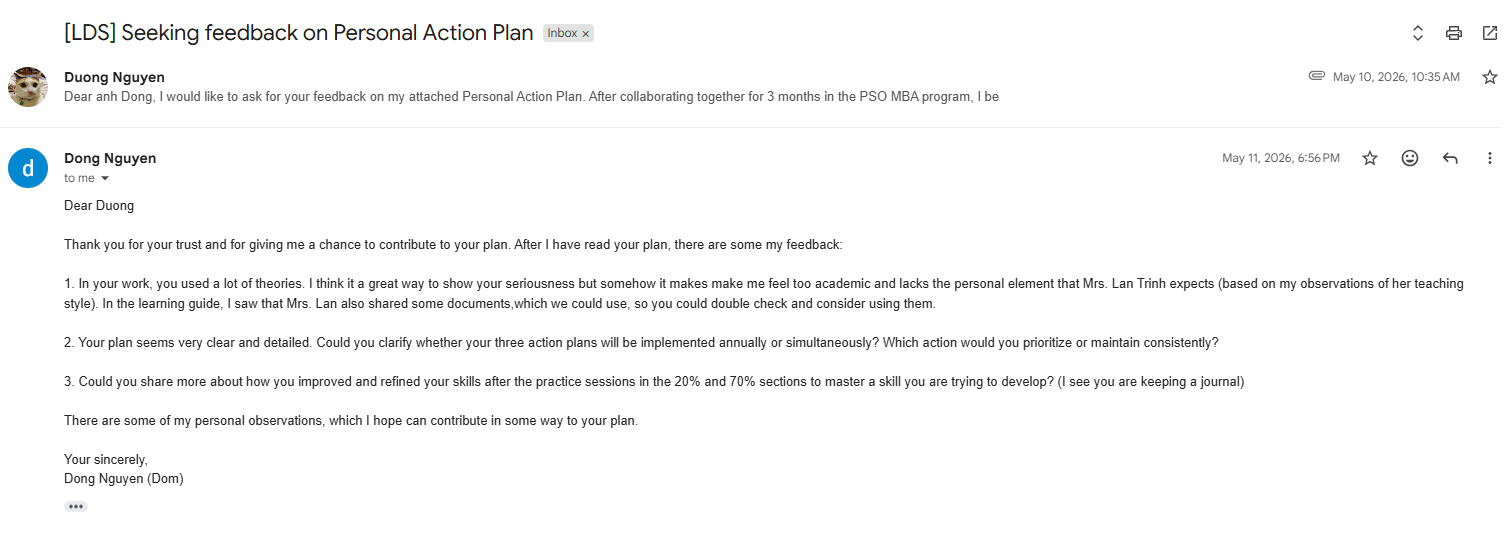
This development plan exists in its best form because of the people who took the time to engage with it seriously — not just to validate, but to challenge and push. Chi Huong and Anh Dong both gave constructive feedback that forced me to think harder, write more honestly, and design a plan that is more grounded in who I actually am rather than who I intended to present.
Chi Huong reminded me that genuine connection — built through shared experience, not just formal networking — is a more sustainable approach for someone with my profile. Anh Dong pushed me to drop the academic armor and bring more real voice into the work, and to make the learning cycles explicit rather than implied.
Both of these contributions have made it into the plan in a real way. I'm grateful for that kind of feedback — the kind that makes you better, not just more comfortable.